When airlines cancel your flight, you’re not just stuck with rebooking hassles—you might be entitled to significant compensation that many passengers never claim. This guide is for travelers who want to turn their flight disruption into maximum financial recovery, whether you’re dealing with a domestic carrier or international airline.
Flight cancellation compensation varies dramatically based on where you’re traveling and which airline rules apply to your situation. Most passengers don’t realize they could receive hundreds or even thousands of dollars beyond just a ticket refund, especially under regulations like EU261 that provide strong passenger compensation rights.
We’ll walk you through how to determine if your cancelled flight refund qualifies for additional compensation and show you the exact steps to calculate your maximum entitled amount. You’ll also learn the best strategies for filing claims that airlines actually pay, plus what to do when carriers try to deny your legitimate airline compensation claim.
Know Your Rights Under Different Jurisdictions

Understanding EU Regulation 261/2004 compensation rules
Your strongest protection comes from EU261, which covers flights departing from EU countries or arriving in the EU on European airlines. This regulation guarantees you up to €600 in flight cancellation compensation, depending on your flight distance and delay length.
You’re entitled to compensation when your flight gets cancelled less than 14 days before departure, unless the airline proves extraordinary circumstances caused the cancellation. Weather issues, air traffic control strikes, and security threats typically don’t qualify you for payment, but mechanical problems, crew scheduling issues, and airline strikes do.
The compensation amounts are fixed: €250 for flights under 1,500km, €400 for EU flights over 1,500km or international flights between 1,500-3,500km, and €600 for flights over 3,500km. You also get care provisions like meals, accommodation, and rebooking on the next available flight regardless of the cancellation reason.
Your airline passenger rights under EU261 remain valid for up to six years after your disrupted flight, giving you plenty of time to pursue your cancelled flight refund even if you initially accepted the airline’s denial.
Familiarizing yourself with US Department of Transportation policies
US regulations focus more on refunds than compensation. When your flight gets cancelled, you’re guaranteed a full refund to your original payment method, even for non-refundable tickets. You don’t need to accept airline credits or vouchers if you prefer cash back.
American airlines must provide prompt refunds within seven business days for credit card purchases and 20 days for other payment methods. You’re also entitled to refunds of ancillary fees like baggage charges and seat upgrades when your flight gets cancelled.
The DOT requires airlines to rebook you on their next available flight at no extra cost or on a partner airline if your original carrier can’t accommodate you within a reasonable timeframe. While there’s no mandatory monetary compensation like EU261, many US airlines offer goodwill gestures like travel vouchers or bonus miles.
Your rights extend to significant delays too. If your departure gets delayed over three hours domestically or six hours internationally, you can claim a full refund and walk away from your travel plans.
Learning about Canadian Air Passenger Protection Regulations
Canada’s APPR provides structured compensation for cancelled flights, though amounts are lower than EU standards. You’re entitled to $400 for flights under 1,000km and $700 for longer flights when cancellations happen within your airline’s control.
Your compensation timeline matters under Canadian rules. For cancellations 14+ days before departure, you only get rebooking or refunds. Between 3-14 days, you receive rebooking plus the monetary compensation. Less than three days notice triggers the full compensation package plus care provisions.
Canadian passenger compensation rights include meal vouchers after two hours, hotel accommodation for overnight delays, and transportation between airport and hotel. You can choose between rebooking on the next available flight or a full refund, plus your compensation payment.
The regulations distinguish between airline-controlled situations (crew shortages, maintenance issues) and exceptional circumstances (weather, security threats). Only airline-controlled cancellations trigger monetary compensation, but you still get refunds and rebooking for weather-related disruptions.
Researching compensation laws in your departure country
Your departure country’s laws often determine which flight disruption compensation rules apply to your journey. Countries like Brazil, Turkey, and Israel have developed their own passenger protection frameworks that might offer better compensation than your destination country’s rules.
Many countries follow the Montreal Convention, which provides baseline protections but focuses mainly on liability for damages rather than fixed compensation amounts. However, some nations have enhanced these minimum standards with their own legislation.
You should always check both your departure and arrival country regulations, plus any EU261 eligibility, to determine which offers the best airline refund process for your situation. Sometimes you can choose which jurisdiction’s rules to apply, especially on connecting flights through multiple countries.
Research local consumer protection agencies and aviation authorities in your departure country, as they often provide free assistance with compensation claims. Some countries have established dedicated airline passenger rights enforcement teams that can pressure airlines more effectively than individual passengers.
Document Everything From the Moment of Cancellation
Taking photos of departure boards and cancellation notices
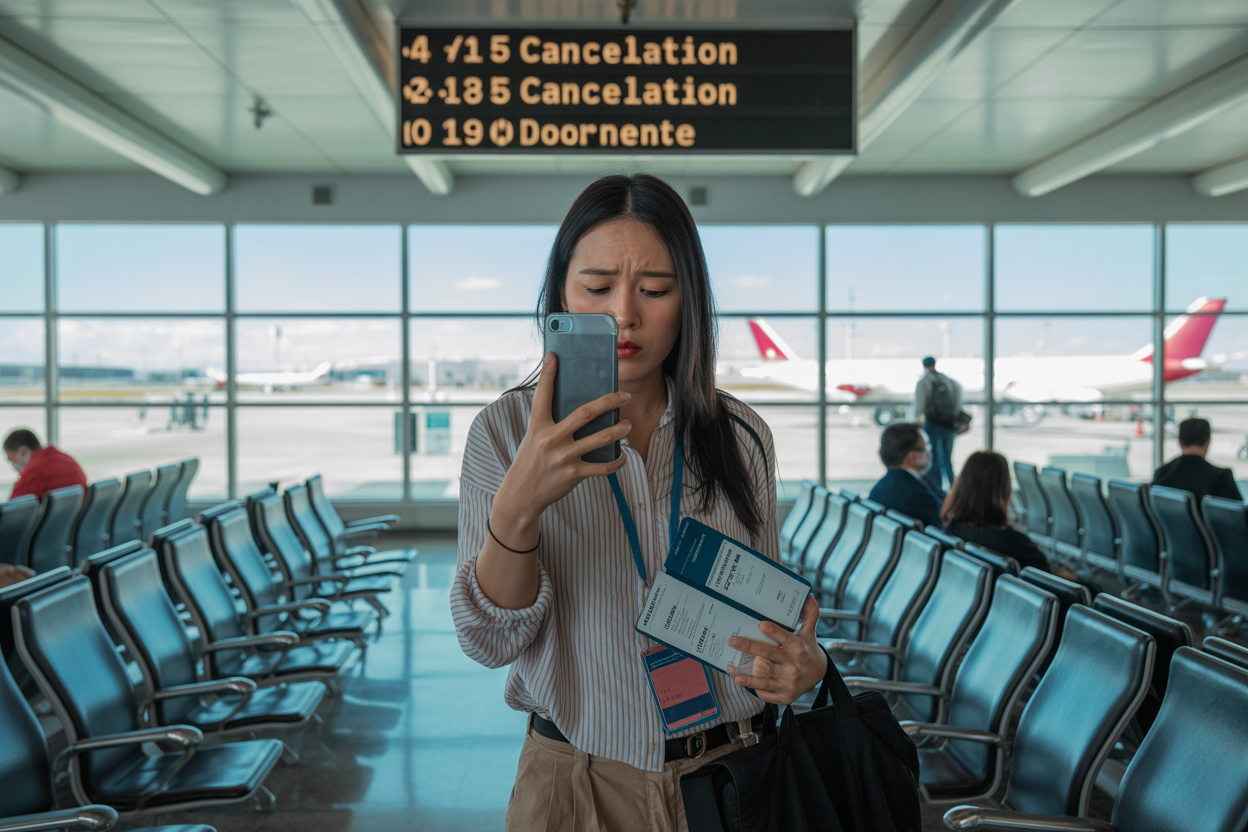
Your smartphone becomes your best evidence-gathering tool when your flight gets cancelled. Start snapping photos of the departure board immediately after you notice the cancellation or delay notification. Capture clear images showing the flight number, scheduled departure time, and the cancellation or delay status. Don’t just take one quick shot—take multiple photos from different angles to ensure the information is readable.
Pay special attention to any electronic displays or printed notices that explain the reason for cancellation. Airlines often post general statements about weather, mechanical issues, or operational disruptions. These details directly impact your flight cancellation compensation eligibility under various passenger rights regulations.
Take timestamped photos of airport announcements, gate changes, and any updated departure information. Your phone’s camera automatically embeds the date and time into each photo’s metadata, creating an indisputable timeline of events. This documentation proves when the airline first notified passengers about the disruption.
Don’t overlook boarding gate displays, airline counters, and any paper notices posted around the terminal. Some airlines post detailed explanations about the cancellation that might not appear on the main departure boards.
Saving all booking confirmations and receipts
Your original booking confirmation contains critical information for any airline compensation claim. Save your email confirmation, e-ticket, and any correspondence you received when purchasing your flight. This documentation establishes your contract with the airline and proves your entitlement to compensation.
Keep every receipt related to your journey, starting from your initial booking through any expenses incurred due to the cancellation. Save receipts for:
- Airport parking fees
- Ground transportation to and from the airport
- Meals purchased during extended delays
- Hotel accommodation if stranded overnight
- Alternative transportation costs
- Communication expenses (international phone calls, WiFi charges)
- Replacement tickets with other airlines
Store digital copies of all receipts in cloud storage or email them to yourself immediately. Paper receipts fade over time, and you might need this documentation months later when pursuing your claim.
Print backup copies of electronic receipts and confirmations. Having both digital and physical copies protects you if technical issues prevent access to your online accounts during the claims process.
Recording conversations with airline staff
Document every interaction with airline personnel, from gate agents to customer service representatives. Write down the staff member’s name, their position, the time of conversation, and detailed notes about what they told you regarding the cancellation reason and your compensation options.
Many airlines provide conflicting information about passenger rights, so keeping detailed records helps you challenge incorrect statements later. Some representatives might tell you that weather cancellations don’t qualify for compensation, when actually the specific circumstances determine eligibility under regulations like EU261.
Use your phone’s voice recording app when legally permitted, but always inform the staff member you’re recording. In many jurisdictions, you need consent from both parties for audio recordings. Even if you can’t record, take detailed written notes during or immediately after each conversation.
Request supervisor contact information when front-line staff can’t resolve your concerns. Document the chain of command and any escalation attempts. This shows you followed proper procedures when filing formal complaints later.
Collecting written statements about the cancellation reason
Push for written explanations about why your flight was cancelled. Verbal explanations from gate agents often differ from the airline’s official position, and written statements carry more weight in compensation disputes.
Ask customer service representatives to email you a formal explanation of the cancellation cause. Airlines sometimes claim “extraordinary circumstances” to avoid paying compensation, but you need specific details to challenge these assertions effectively.
Collect any printed notices, leaflets, or official communications the airline distributes to affected passengers. These documents often contain the airline’s official stance on the disruption and their compensation policies.
Request written confirmation of any alternative arrangements the airline offers, including rebooking details, meal vouchers, or hotel accommodations. Having these offers in writing prevents disputes about what assistance the airline actually provided.
If the airline refuses to provide written statements, send them an email requesting clarification and keep their response. This creates a paper trail showing you attempted to gather official information about the cancellation circumstances.
Save screenshots of the airline’s social media posts or website announcements about widespread disruptions affecting your flight date. Airlines often post different explanations on various platforms, and these inconsistencies can strengthen your compensation claim when challenging their stated reasons for cancellation.
Determine if Your Cancellation Qualifies for Compensation

Identifying Extraordinary Circumstances That Void Compensation
Airlines can legally refuse flight cancellation compensation if they can prove the cancellation resulted from extraordinary circumstances beyond their control. You need to understand exactly what qualifies and what doesn’t, because airlines often stretch this definition to avoid payouts.
Weather conditions like severe storms, hurricanes, or heavy snow count as extraordinary circumstances. So do air traffic control strikes, airport closures due to security threats, and natural disasters. However, airline staff strikes, technical problems with aircraft, and crew scheduling issues don’t qualify as extraordinary circumstances – you’re still entitled to compensation in these situations.
Be skeptical when airlines claim “operational reasons” or “air traffic control delays.” These vague explanations often mask compensable issues. Medical emergencies that require flight diversions also fall under extraordinary circumstances, but only if they directly caused your specific cancellation.
Confirming the Advance Notice Timeline Requirements
The timing of when you received cancellation notice directly impacts your airline passenger rights and compensation eligibility. Different regulations have specific advance notice requirements that determine whether you can claim compensation.
Under EU261 regulations, you’re entitled to full compensation if the airline notifies you less than 14 days before departure. If you receive notice between 7-14 days in advance, you can still claim compensation unless they offer alternative flights departing within two hours of your original time and arriving within four hours of your scheduled arrival.
For cancellations with 7+ days notice, airlines can avoid compensation by providing reasonable alternative flights. Keep all communication records showing exactly when you were informed about the cancellation. Screenshots of emails, text messages, and app notifications serve as crucial evidence for your cancelled flight refund claim.
Verifying Flight Distance and Route Eligibility
Your compensation amount depends on your flight’s distance and route, making it essential to verify these details before filing claims. Different jurisdictions calculate flight distance differently, so you need to understand which rules apply to your specific situation.
EU261 compensation uses the great circle distance between airports to determine payment tiers:
- Flights under 1,500 km: €250 compensation
- EU flights over 1,500 km and non-EU flights 1,500-3,500 km: €400 compensation
- Non-EU flights over 3,500 km: €600 compensation
For flights departing from EU airports, you’re covered regardless of the airline’s nationality. For flights arriving in the EU from non-EU countries, only EU-based airlines must provide compensation under EU261. Check your ticket details and route carefully – connecting flights may qualify for higher compensation tiers based on total journey distance.
Understanding Cancellation Versus Delay Distinctions
Airlines sometimes reclassify cancellations as delays to reduce their compensation obligations, so you must understand the legal distinctions. A cancellation occurs when your original flight doesn’t operate at all, while a delay means your flight operates but departs or arrives later than scheduled.
If your airline moves you to a different flight number or significantly changes your departure time (typically 3+ hours), this constitutes a cancellation rather than a delay. Some airlines try calling this a “schedule change,” but passenger compensation rights treat it as a cancellation.
Delays triggering compensation typically require 3+ hour arrival delays, with compensation amounts based on flight distance. However, cancellations often provide higher compensation regardless of how quickly the airline rebBooks you on alternative flights. Document any flight number changes, gate changes, or rebooking attempts as evidence of cancellation rather than delay.
When airlines offer vouchers or rebooking instead of your original flight, they’re acknowledging cancellation. Don’t let airlines minimize your situation by calling significant disruptions mere “delays” – your flight disruption compensation depends on proper classification of what actually happened to your travel plans.
Calculate Your Maximum Entitled Compensation Amount

Using Distance-Based Compensation Formulas
Your flight cancellation compensation depends heavily on the distance between your departure and arrival airports. EU261 regulations set clear compensation amounts based on flight distance, and understanding these calculations helps you claim every euro you deserve.
For flights under 1,500 kilometers, you’re entitled to €250 per passenger. This covers most domestic European flights and short regional connections. Mid-range flights between 1,500 and 3,500 kilometers qualify for €400 compensation – think London to Istanbul or Paris to Morocco. Long-haul flights exceeding 3,500 kilometers earn you the maximum €600 payout.
Outside the EU, different rules apply. US Department of Transportation regulations don’t mandate specific compensation amounts, but many airlines offer vouchers or cash payments voluntarily. Canadian passengers can claim up to CAD $1,000 depending on flight length and delay duration.
Calculate your exact distance using online tools like the Great Circle Mapper. Airlines sometimes misclassify routes to minimize payouts, so double-check their calculations. Your compensation applies per person, meaning a family of four could receive €2,400 for a cancelled long-haul flight.
Adding Meal and Accommodation Reimbursements
Beyond basic flight cancellation compensation, you can recover additional expenses for meals, hotels, and ground transportation. These costs add up quickly during unexpected overnight stays or extended delays.
Airlines must provide meal vouchers during lengthy delays – typically after two hours for short flights, three hours for medium flights, and four hours for long-haul routes. If they don’t offer vouchers proactively, buy reasonable meals yourself and save all receipts. Stick to airport restaurant prices rather than expensive hotel dining to avoid reimbursement disputes.
Accommodation becomes mandatory when cancellations force overnight delays. Airlines should book and pay for hotel rooms directly, but if they don’t, choose mid-range accommodations and keep detailed records. Budget around €100-150 per night for reasonable hotel expenses in most European cities.
Ground transportation between airports and hotels also qualifies for reimbursement. Take taxis or ride-shares rather than rental cars, as these costs are easier to justify and recover. Airport shuttle services often provide the most defensible expense claims.
Document everything with photos of receipts, booking confirmations, and expense summaries. Create a simple spreadsheet tracking dates, amounts, and expense categories to streamline your compensation claim process.
Including Additional Transportation Costs
Transportation expenses beyond standard meal and hotel costs can significantly boost your total compensation recovery. Smart passengers track every travel-related expense caused by flight cancellations.
Alternative flight bookings represent your biggest potential recovery. When airlines can’t rebook you promptly, purchase replacement tickets on other carriers and claim full reimbursement. Choose reasonable fare classes – economy or premium economy bookings are defensible, while first-class upgrades might face scrutiny.
Ground transportation costs extend beyond hotel shuttles. If cancellations force you to drive to alternate airports, calculate mileage reimbursement using standard government rates (typically €0.30-0.50 per kilometer in Europe). Parking fees at different airports, tolls, and fuel receipts all qualify for recovery.
Phone and internet charges incurred while rebooking flights or contacting airlines deserve reimbursement too. International roaming fees, airport WiFi charges, and extended phone calls to customer service lines represent legitimate expenses caused by airline disruptions.
Consider compensation for missed connections and their cascading costs. If your cancellation causes you to miss a cruise departure or hotel check-in, airlines may owe additional damages beyond standard EU261 amounts. Travel insurance might cover these losses, but don’t overlook potential airline liability.
Keep detailed expense logs with timestamps, locations, and clear explanations for each charge. Airlines scrutinize additional cost claims carefully, so organized documentation strengthens your passenger compensation rights significantly.
File Your Compensation Claim Strategically

Contacting the airline directly first
Your first move should always be reaching out to the airline directly before exploring other options. Most airlines have dedicated customer service teams specifically trained to handle flight cancellation compensation claims, and going through their internal process first can save you time and hassle.
Start by calling the airline’s customer service line rather than using chat or email for your initial contact. Phone conversations create a sense of urgency and allow you to gauge the representative’s willingness to help. When you call, clearly state that you’re seeking compensation for your cancelled flight under applicable passenger rights regulations. Mention specific rules like EU261 if your flight falls under European jurisdiction, as this shows you understand your rights.
Don’t accept the first “no” you receive. Customer service representatives often have different levels of authority, and some may not be fully trained on airline passenger rights regulations. If the first person can’t help, politely ask to speak with a supervisor or someone from the passenger rights department.
Keep your initial conversation focused and factual. Provide your booking reference, flight details, and cancellation circumstances. Avoid getting emotional or confrontational, as this rarely leads to positive outcomes. Instead, present your case professionally while making it clear you know your rights under the airline cancellation policy.
Using official airline compensation request forms
Every major airline provides official compensation request forms, usually available on their website under sections like “Customer Relations,” “Passenger Rights,” or “Flight Disruptions.” These forms are specifically designed for flight cancellation compensation claims and using them demonstrates you’re serious about pursuing your claim through proper channels.
Before filling out any form, locate the correct one for your situation. Airlines often have separate forms for different types of claims – general complaints, refund requests, and compensation claims under specific regulations. Choose the form that specifically mentions compensation for flight disruptions or passenger rights violations.
Complete every section of the form thoroughly and accurately. Incomplete forms give airlines an easy excuse to delay or reject your claim. Include all requested information: personal details, flight information, booking references, and detailed descriptions of how the cancellation affected you. Many forms ask for your preferred compensation amount – always request the maximum amount you’re entitled to under applicable regulations.
Attach all supporting documentation when submitting your form. This includes boarding passes, booking confirmations, receipts for additional expenses, and photos of departure boards showing your cancellation. Upload clear, readable copies of all documents to strengthen your airline refund process.
Setting firm deadlines for airline responses
Airlines often drag their feet on compensation claims, hoping passengers will give up or forget about their claims. Combat this by setting clear deadlines for responses and communicating these expectations upfront.
When you submit your initial claim, specify that you expect a response within a reasonable timeframe – typically 30 days for complex claims or 14 days for straightforward cases. Reference the airline’s own published response times if they list any on their website. Many airlines claim to respond within specific timeframes, so hold them to their own standards.
Follow up systematically if you don’t receive responses by your stated deadlines. Send reminder emails or make follow-up calls exactly when your deadline expires. Document these follow-ups and reference your original deadline in all communications. This approach shows you’re organized and serious about pursuing your claim.
Create escalation timelines that increase pressure over time. If you don’t receive a response within your initial deadline, give them one additional week with a more formal tone. After that, mention that you’re prepared to escalate your claim to regulatory authorities or consider legal action if necessary.
Keeping detailed records of all communications
Your record-keeping can make or break your compensation claim. Airlines sometimes lose paperwork, claim they never received your request, or provide contradictory information across different interactions. Comprehensive documentation protects you from these tactics and strengthens your position if you need to escalate.
Create a dedicated file or folder for your claim, whether physical or digital. Include every piece of communication related to your cancelled flight refund request. This means saving email confirmations, taking screenshots of web forms, and writing down details from phone conversations immediately after they happen.
For phone calls, record the date, time, duration, representative’s name (if provided), and a detailed summary of the conversation. Note any promises made, deadlines given, or next steps discussed. If possible, ask for confirmation numbers or reference numbers for your calls.
Save all emails in their original format and take screenshots as backup. Email systems can have technical issues, and having visual proof of your communications provides additional security. When forwarding emails or referencing previous communications, include the complete thread to provide full context.
Keep a chronological log of all interactions with specific dates and outcomes. This timeline becomes invaluable if you need to escalate your claim or demonstrate the airline’s lack of responsiveness to regulatory authorities. Your detailed records show you’ve made good faith efforts to resolve the matter directly with the airline before seeking external help.
Escalate Your Claim When Airlines Refuse Payment

Filing complaints with aviation regulatory authorities
When an airline refuses to pay your rightful flight cancellation compensation, your next step is contacting the relevant aviation authority. In the United States, file a complaint with the Department of Transportation (DOT), while EU passengers should reach out to their national enforcement body like the Civil Aviation Authority in the UK or the German Federal Aviation Office.
Your complaint needs to include all documentation you’ve gathered: boarding passes, cancellation notices, correspondence with the airline, and proof of expenses. Be specific about which regulation applies to your case – cite EU261 for European flights or DOT regulations for US carriers. Most regulatory bodies offer online complaint forms that streamline this process.
The regulatory authority will investigate your case and can impose penalties on airlines that consistently violate passenger compensation rights. While this process might take several months, it creates an official record and often pressures airlines to resolve outstanding claims. Many airlines prefer settling directly rather than facing regulatory scrutiny.
Keep your complaint factual and focused on how the airline violated specific regulations. Avoid emotional language and stick to the facts about your cancelled flight and the airline’s refusal to provide compensation.
Engaging third-party claim services and their fee structures
Third-party claim services specialize in pursuing airline compensation claims on your behalf. These companies understand the complexities of airline refund processes and have established relationships with carriers that can expedite resolution.
Most claim services operate on a “no win, no fee” basis, typically charging between 25% to 35% of your recovered compensation. While this reduces your final payout, these services handle all communication with the airline and have higher success rates than individual passengers pursuing claims independently.
Research different claim services before choosing one. Look for companies with strong track records, transparent fee structures, and positive customer reviews. Some services offer fixed fees rather than percentage-based charges, which might be more cost-effective for larger claims.
Before signing with any service, read their terms carefully. Understand what happens if they can’t recover your compensation and whether you can pursue the claim independently if you’re unsatisfied with their progress. Some contracts restrict your ability to take other legal action.
Pursuing small claims court options
Small claims court represents an accessible option for recovering flight cancellation compensation when airlines refuse payment. Most jurisdictions allow claims up to $3,000 to $10,000, which covers typical compensation amounts under passenger rights regulations.
Filing in small claims court is relatively inexpensive, usually costing between $30 to $150 in court fees. You don’t need an attorney, and the process is designed for ordinary people to represent themselves. Prepare your case by organizing all documentation chronologically and creating a simple timeline of events.
The key advantage of small claims court is that airlines often send representatives who prefer settling rather than going through a full hearing. Many cases are resolved through court-mediated settlement discussions before reaching trial.
Research your local small claims court procedures, as rules vary by jurisdiction. Some courts require you to attempt mediation before filing suit, while others mandate that you give the airline written notice of your intent to sue. Filing in small claims court also creates a legal record that can strengthen future regulatory complaints.
Utilizing credit card chargeback protections
Your credit card company can be a powerful ally in recovering flight cancellation compensation through chargeback protections. When airlines refuse legitimate refunds or compensation, you can dispute the charge with your card issuer under “services not rendered” or “merchant breach of contract” provisions.
Contact your credit card company within 60 days of receiving your statement showing the disputed charge. Explain that the airline cancelled your flight and refuses to provide required compensation under applicable passenger rights laws. Provide documentation including your original booking confirmation, cancellation notice, and records of your attempts to resolve the issue with the airline.
Credit card companies investigate chargebacks thoroughly and often side with cardholders when airlines fail to follow established refund policies. The chargeback process typically takes 30 to 90 days, during which the disputed amount is temporarily credited to your account while the investigation proceeds.
Premium credit cards often provide additional travel protections beyond standard chargeback rights. These might include trip interruption coverage that compensates you for cancelled flights regardless of the airline’s policies. Review your card benefits or contact customer service to understand what protections apply to your situation.
Maximize Additional Recoverable Expenses

Claiming Reasonable Meal and Refreshment Costs
Your airline owes you more than just basic flight cancellation compensation. When you’re stuck at the airport for hours or overnight, you shouldn’t pay for meals out of your pocket. Airlines must provide meal vouchers during lengthy delays, but if they don’t offer them proactively, you can purchase reasonable meals and demand reimbursement later.
Keep every receipt for food and drinks purchased during your delay. What counts as “reasonable” varies by airport and region, but generally includes standard airport restaurant meals, not luxury dining. A $15-30 meal at an airport restaurant? Absolutely covered. A $200 steak dinner? That’s pushing it.
Document the timeline of your delay and show how meal costs directly resulted from the cancellation. If you’re delayed overnight, you can claim breakfast costs too. Some passengers successfully recover alcoholic beverages if purchased during reasonable meal times, though this varies by airline policy.
Recovering Hotel Accommodation Expenses
When your flight gets cancelled and you’re stranded overnight, the airline should provide hotel accommodation. If they don’t arrange it automatically, book your own room and bill them later. Choose mid-range accommodations – think business hotels, not luxury resorts.
Your hotel expenses should include the room rate, taxes, and essential fees. Many airlines will also cover ground transportation between the airport and hotel. Get receipts for everything, including taxi or shuttle costs.
Airlines typically won’t cover room service, minibar charges, or premium amenities. Stick to the basic room rate and necessary transportation. If you have special needs (like medical equipment requiring refrigeration), document these requirements as they may qualify for additional accommodation coverage.
Getting Reimbursed for Alternative Transportation
Sometimes booking alternative transportation gets you home faster than waiting for the airline’s next available flight. You can often recover these costs, but there are smart ways to approach this.
Ground transportation like trains, buses, or rental cars frequently gets approved for reimbursement, especially for shorter distances. If you book a flight on another airline, you might get reimbursed, but the cost must be reasonable. Don’t book first-class tickets and expect full reimbursement if economy was available.
Compare costs before booking alternatives. Airlines more readily approve reimbursements when your alternative transportation costs less than or roughly equals what they would spend rebooking you. Document that their next available flight was significantly delayed – this strengthens your reimbursement claim.
Watch this video
Securing Compensation for Missed Connections and Events
Missing important events due to flight cancellations can trigger additional compensation beyond standard passenger compensation rights. You need to prove the cancellation directly caused you to miss something valuable and that you informed the airline of your tight connection or important event when booking.
Wedding venues, concert tickets, business meetings, and cruise departures represent common scenarios where passengers recover additional costs. Keep proof of your original plans – tickets, reservations, contracts showing non-refundable deposits.
The key lies in demonstrating reasonable foreseeability. If you booked a flight landing two hours before a wedding ceremony, that’s cutting it close. But if you had a six-hour buffer that got eliminated by the cancellation, your claim becomes much stronger.
Document all consequential losses: non-refundable hotel bookings, event tickets, business opportunities lost. While airlines fight these claims harder than direct expenses, persistence often pays off, especially when you can show they knew about your time-sensitive plans during booking.
Conclusion

Getting the money you deserve when your flight gets cancelled isn’t just about luck – it’s about knowing the system and working it to your advantage. By understanding your rights, keeping detailed records, and calculating exactly what you’re owed, you put yourself in the driver’s seat. Don’t let airlines brush off your legitimate claims with generic responses or lowball offers.
The key is being proactive and persistent. File your claims with confidence, back them up with solid documentation, and don’t be afraid to push back when airlines try to deny what’s rightfully yours. Remember, they’re counting on you to give up or accept less than you deserve. Your cancelled flight might have ruined your plans, but it doesn’t have to cost you money when you know how to fight for every dollar you’re entitled to receive.