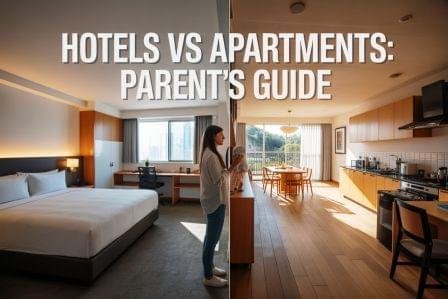
Planning a family vacation means making tough choices about where to stay. For parents juggling kids, luggage, and tight budgets, the hotels vs apartments for families debate isn’t just about picking a bed—it’s about finding the right balance of comfort, cost, and convenience for your crew.
This family accommodation comparison guide helps parents navigate the key differences between traditional hotels and family vacation rental vs hotel options. You’ll discover how space requirements change when traveling with children, plus get a realistic breakdown of costs that actually impact your family budget. We’ll also explore why kitchen access might be your secret weapon for stress-free family meals and examine how daily services stack up against doing things yourself.
Whether you’re planning a weekend getaway or considering extended stay family options, these five factors will help you choose the best kids friendly accommodation options for your next adventure.
Space and Comfort Considerations for Growing Families
Room layouts and sleeping arrangements for multiple children
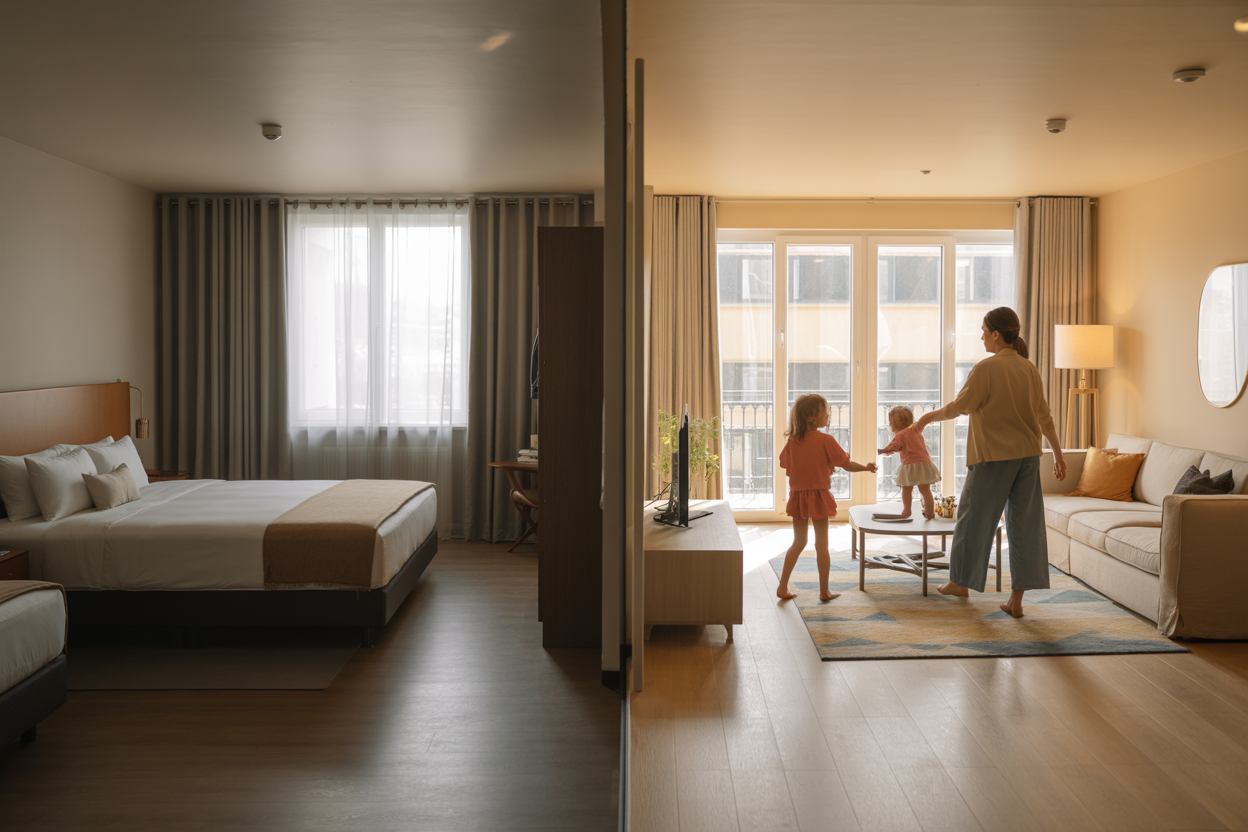
When choosing between hotels and apartments for families, bedroom configurations make or break your vacation comfort. Standard hotel rooms typically offer one or two beds, forcing parents to get creative with sleeping arrangements for multiple kids. You might find yourself dealing with rollaway beds, sofa beds, or even having children share beds designed for adults.
Family accommodation comparison reveals that apartments consistently provide better sleeping solutions. Most vacation rentals feature separate bedrooms with proper beds for each family member. This means your toddler won’t accidentally kick your teenager all night, and parents can actually get some rest.
Hotels vs apartments for families becomes particularly relevant for larger families. While hotels might offer connecting rooms, you’re essentially paying for two separate accommodations. Apartment-style hotels for families provide dedicated children’s rooms at a fraction of the cost, with proper closet space and room for each child’s belongings.
Living space flexibility for family activities and downtime
Hotel rooms confine families to a single space where everyone must share the same activities and noise levels. Picture this: your early riser wants to watch cartoons while others sleep in, or teens need space to video chat with friends back home.
Family travel accommodation in apartments offers distinct living areas where different family members can pursue separate activities simultaneously. Kids can play board games in the living room while parents read books on the balcony. This separation prevents the cabin fever that often strikes families stuck in cramped hotel rooms.
Extended stay family options shine particularly bright during rainy days or when someone feels under the weather. Instead of being trapped in a bedroom with sick children, apartments provide multiple rooms where healthy family members can continue enjoying their vacation.
Storage solutions for extended stays with kids
Anyone who travels with children knows they bring enough stuff to stock a small store. Hotel rooms offer minimal storage – usually just a small closet and a few drawers that barely accommodate adult clothing, let alone children’s gear, toys, and extra supplies.
Apartments provide proper storage solutions including full-sized closets, kitchen cabinets for snacks and baby supplies, and dedicated spaces for sports equipment or beach gear. Parents can actually unpack and organize belongings instead of living out of suitcases for the entire trip.
Family budget accommodation becomes even more valuable when you consider laundry facilities. Apartments typically include washers and dryers, meaning you can pack lighter and wash clothes as needed. Hotels charge premium prices for laundry services or force families to find local laundromats.
Privacy options for parents and children
Parents deserve some adult time during family vacations, but hotel rooms make this nearly impossible. Once children go to sleep, parents must whisper, watch TV with subtitles, or retreat to the bathroom for phone calls.
Kids friendly accommodation options in apartments provide separate spaces where parents can enjoy evening conversations, work calls, or simply decompress after busy sightseeing days. Children sleep soundly in their own rooms while parents reclaim some personal space in the living area.
Family vacation rental vs hotel comparisons consistently favor apartments for teenage children who crave independence. Teens can have their own space to hang out, listen to music, or chat with friends without disturbing the entire family. This privacy reduces family tension and creates happier vacation memories for everyone involved.
Cost Analysis That Impacts Your Family Budget

Upfront booking costs and hidden fees comparison
When comparing family accommodation comparison options, hotels and apartments reveal striking differences in their pricing structures. Hotels typically advertise lower nightly rates, but the final bill often tells a different story. Resort fees, parking charges, Wi-Fi costs, and per-person occupancy fees can inflate your budget by 20-40%. Many family-friendly hotels charge $25-50 per night in resort fees alone, plus $15-30 daily for parking.
Apartments generally present transparent pricing with fewer surprise charges. Most apartment rentals include parking, Wi-Fi, and utilities in the base rate. However, cleaning fees ($50-150) and security deposits ($200-500) represent upfront costs that hotels don’t require. Vacation rental platforms often add service fees ranging from 6-14% of the booking total.
For families booking apartment hotel family stay options, the math works differently. While apartments might seem expensive initially, the per-night cost decreases significantly for stays longer than three days. Hotels maintain consistent nightly rates regardless of duration, making extended stays proportionally more expensive.
Meal expenses: hotel dining vs apartment cooking savings
Restaurant meals represent one of the biggest budget drains for traveling families. Hotel dining typically costs $15-25 per person for breakfast, $20-35 for lunch, and $30-50 for dinner. A family of four can easily spend $200-400 daily on meals at hotel restaurants or nearby establishments.
Apartments with full kitchens transform your family budget accommodation strategy. Grocery shopping allows families to prepare familiar meals at a fraction of restaurant costs. A week’s worth of groceries for four people ranges from $150-300, compared to $1,400-2,800 for restaurant meals during the same period.
The savings multiply when considering children’s eating habits. Kids often prefer simple foods like pasta, sandwiches, or cereal – items that cost pennies to prepare but command premium prices at hotels. Having a kitchen also means no pressure to finish expensive restaurant meals that children might reject.
Extended stay discounts and weekly rate advantages
Extended stay family options reveal where apartments truly shine financially. Most vacation rentals offer significant weekly and monthly discounts, often reducing daily rates by 15-30%. A week-long stay that costs $200 per night might drop to $140 per night with weekly pricing.
Hotels rarely provide comparable long-term discounts for family travel lodging comparison. Their business model relies on high turnover, so extended stays don’t typically unlock substantial savings. Some hotel chains offer modest weekly rates, but these seldom match the percentage savings available through apartment rentals.
For families planning stays of five days or more, the financial advantages become clear. Weekly apartment rentals often cost less than four nights in equivalent hotels, especially when factoring in meal savings and eliminated daily fees. This pricing structure makes apartments particularly attractive for family vacation rental vs hotel decisions involving longer trips or temporary relocations.
Kitchen Access and Meal Planning Benefits

Home-cooked meals for picky eaters and dietary restrictions
Parents know the struggle of traveling with children who have specific food preferences or dietary needs. Family accommodation comparison becomes crucial when you’re dealing with a child who only eats pasta without sauce or requires gluten-free options. Apartments give you complete control over meal preparation, allowing you to recreate familiar dishes that your kids actually enjoy.
Hotels typically offer limited room service menus or breakfast buffets that might not cater to special dietary requirements. When your child has food allergies or follows a restricted diet, apartment kitchens provide the safety and flexibility needed to prepare meals without cross-contamination concerns. You can bring familiar ingredients from home or shop for specific brands your family trusts.
The stress of mealtime battles disappears when you can prepare foods exactly how your children like them. No more negotiating with hotel kitchen staff or hoping the restaurant can accommodate your requests. Apartment hotel family stay options give parents the peace of mind that comes with having full kitchen facilities at their disposal.
Snack availability and refrigeration for growing appetites
Kids eat constantly, and their hunger doesn’t follow hotel dining schedules. Apartments equipped with full-sized refrigerators and pantry space solve this common travel challenge. You can stock up on yogurt, fresh fruit, crackers, and other healthy snacks that keep little ones satisfied between meals.
Hotels might offer mini-fridges, but these tiny units barely hold a few drinks and snacks. When traveling with multiple children or staying for extended periods, family vacation rental vs hotel comparisons clearly favor apartments. You can buy groceries in bulk and store leftovers properly, reducing food waste and ensuring snacks are always available.
Growing teenagers especially benefit from having constant access to food. Instead of expensive hotel vending machines or room service charges, parents can provide nutritious options that fuel active vacation days. Fresh fruits, sandwiches, and homemade treats become readily available whenever hunger strikes.
Cost savings from grocery shopping vs restaurant meals
The financial impact of feeding a family while traveling adds up quickly. Restaurant meals, room service, and hotel dining can easily cost $150-200 per day for a family of four. Family budget accommodation planning shows that apartments with kitchens dramatically reduce food expenses.
A typical grocery shopping trip costs about $100-120 for several days’ worth of meals and snacks for the same family. This represents savings of 60-70% compared to dining out for every meal. These savings become even more significant during longer stays or when traveling with larger families.
| Accommodation Type | Daily Food Cost (Family of 4) | Weekly Food Cost |
|---|---|---|
| Hotel (all meals out) | $180-220 | $1,260-1,540 |
| Apartment (grocery shopping) | $50-70 | $350-490 |
| Potential Savings | $130-150/day | $910-1,050/week |
Parents can allocate the money saved on food toward family activities, attractions, or extending their vacation. Extended stay family options with kitchen facilities make long-term travel financially feasible for many families who would otherwise find it prohibitively expensive.
Convenience of preparing familiar foods in unfamiliar places
Travel already disrupts children’s routines enough without completely changing their eating habits. Having a kitchen allows families to maintain some normalcy by preparing familiar breakfast foods, favorite snacks, and comfort meals. This stability helps children adjust better to new environments and time zones.
Kids friendly accommodation options with full kitchens let parents pack familiar spices, special ingredients, or dietary supplements that might be hard to find in unfamiliar locations. You can prepare a comforting meal after a long day of sightseeing, helping tired children wind down for bedtime.
The ability to make simple meals also provides flexibility in daily schedules. Parents don’t need to plan activities around restaurant hours or worry about finding open establishments during off-peak times. Family travel accommodation with kitchen access means you can eat breakfast early to beat crowds at attractions or prepare a late dinner after evening activities without additional stress or expense.
Daily Services and Maintenance Responsibilities
Housekeeping services frequency and family-friendly policies
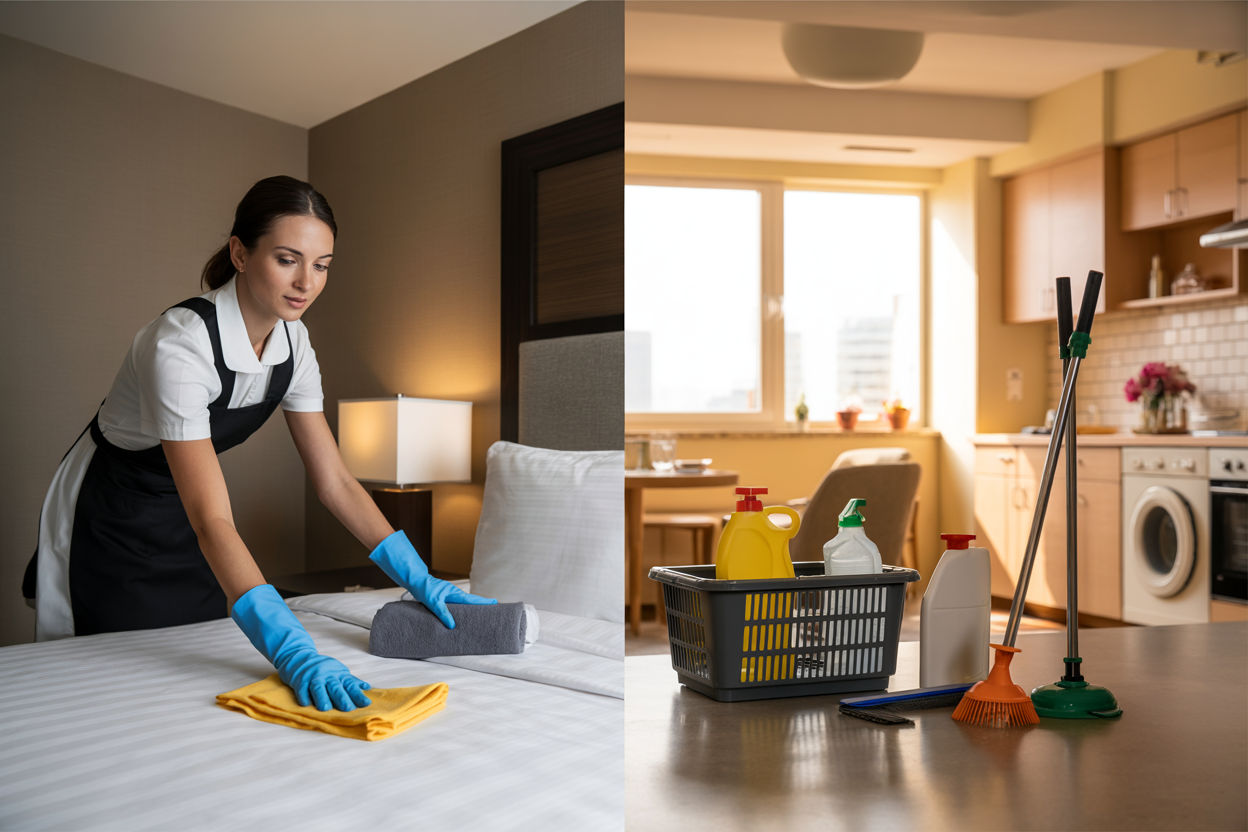
Hotels typically provide daily housekeeping as a standard service, which can be a game-changer for parents dealing with the chaos that follows active kids. Fresh towels, made beds, and tidied rooms mean one less thing on your parental to-do list. Most family-friendly hotels also accommodate requests for extra amenities like cribs, rollaway beds, or childproofing supplies.
However, apartment accommodations usually offer housekeeping on a less frequent basis – often weekly or bi-weekly, depending on your length of stay. Some extended stay family options provide housekeeping services upon request for an additional fee. This reduced frequency means parents need to handle daily tidying and basic cleaning themselves, but it also offers more privacy and control over your family’s living space.
Hotel vs Apartment Housekeeping Comparison:
| Service Type | Hotels | Apartments |
|---|---|---|
| Frequency | Daily | Weekly/Bi-weekly |
| Cost | Included | Often extra fee |
| Family amenities | Usually provided | May need to request |
| Privacy level | Lower | Higher |
Laundry facilities and clothing management for active kids
Managing laundry becomes a significant consideration when traveling with children who seem to go through multiple outfit changes daily. Hotels generally offer laundry services, but these can be expensive and time-consuming. Some family vacation rental vs hotel comparisons show that hotel laundry costs can add $20-50 per load, making it impractical for longer stays.
Apartments typically include in-unit washers and dryers or provide access to shared laundry facilities at no additional cost. This access becomes invaluable for families with toddlers prone to spills, active kids who play hard, or extended stays where packing enough clothes becomes impossible. Having laundry facilities means you can pack lighter and handle accidents or dirty clothes immediately without waiting for hotel services or paying premium prices.
Maintenance requests and response times for family needs
When something breaks or needs attention in your family accommodation comparison, response times can significantly impact your stay. Hotels usually have 24/7 maintenance staff on-site, providing quick responses to urgent issues like broken air conditioning, plumbing problems, or safety concerns. This immediate availability offers peace of mind, especially when traveling with young children who need consistent comfort and safety.
Apartment-style accommodations may have slower response times, particularly for non-emergency issues. Maintenance requests often go through property management companies, which might mean waiting until business hours or dealing with external contractors. However, apartments often provide more self-sufficiency options, like having basic tools available or allowing guests to handle minor issues independently.
For families with specific needs – like accessibility requirements or childproofing concerns – hotels typically respond faster but apartments might offer more permanent solutions for longer stays. The choice between immediate professional service versus self-reliant flexibility often depends on your family’s comfort level and the nature of your accommodation needs.
Location Advantages for Family Activities and Safety
Neighborhood safety ratings and family-friendly environments
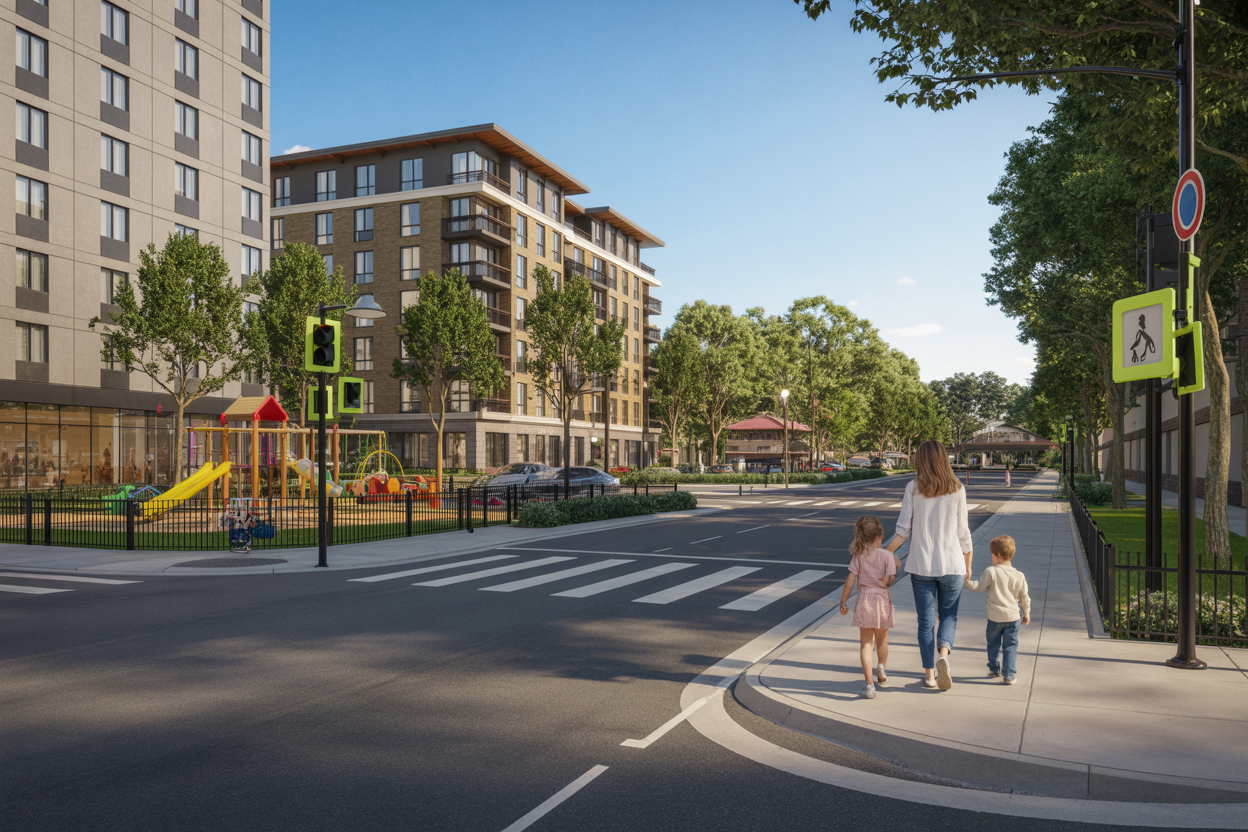
Safety becomes your top priority when choosing family accommodation comparison options. Hotels typically occupy well-monitored commercial districts with security personnel, cameras, and regular foot traffic. These areas often feature better lighting and maintained sidewalks, making evening strolls with children more comfortable.
Apartments, however, place you directly into residential neighborhoods where locals live and raise their families. This authentic experience offers insights into real community life, but requires research into crime statistics and local safety ratings. Check online neighborhood safety databases and read recent reviews from other families who’ve stayed in specific areas.
Family-friendly environments vary dramatically between hotel zones and residential districts. Hotel areas cater to tourists with sanitized, predictable surroundings, while apartment neighborhoods might offer playgrounds, community centers, and genuine local culture that children find fascinating.
Proximity to attractions, parks, and child-friendly venues
Apartment hotel family stay locations often provide better access to neighborhood parks and local attractions that don’t appear in tourist guides. Children can enjoy playgrounds where local kids play, creating spontaneous social interactions and authentic cultural experiences.
Hotels usually cluster near major tourist attractions, reducing travel time to popular destinations but potentially increasing costs for family activities. Everything nearby targets tourists, meaning higher prices for meals, entertainment, and souvenirs.
Apartments situated in residential areas might require longer commutes to famous attractions, but they’re often walking distance from hidden gems: small museums, local festivals, community pools, or family-owned restaurants that welcome children with genuine warmth rather than tourist tolerance.
Transportation access and walkability with strollers and luggage
Maneuvering strollers and luggage reveals stark differences between hotel and apartment locations. Hotel areas prioritize accessibility with smooth sidewalks, elevator access, and taxi stands designed for travelers carrying multiple bags and equipment.
Apartment buildings might present challenges: narrow doorways, flights of stairs, or cobblestone streets that torture stroller wheels. However, residential neighborhoods often offer better public transportation connections that locals use daily, potentially saving money on tourist-targeted transport services.
Consider your family’s mobility needs carefully. Toddlers in strollers, elderly grandparents, or travelers with multiple suitcases need smooth, accessible routes. Research street views online and read accessibility reviews before booking any family vacation rental vs hotel option.
Local amenities like grocery stores, pharmacies, and medical facilities
Kids friendly accommodation options in residential areas typically offer superior access to everyday necessities. Grocery stores, pharmacies, and medical facilities serve local families, providing competitive prices and practical solutions for traveling parents dealing with forgotten diapers, unexpected illnesses, or dietary restrictions.
Hotel districts often lack full-service grocery stores, featuring instead overpriced convenience shops targeting tourists. Finding a pharmacy at midnight or a pediatric clinic becomes challenging when everything nearby serves temporary visitors rather than permanent residents.
| Amenity Type | Hotel Areas | Apartment Areas |
|---|---|---|
| Grocery Stores | Limited, expensive | Full selection, competitive prices |
| Pharmacies | Tourist-focused, limited hours | Local chains, extended hours |
| Medical Care | Tourist clinics, higher costs | Community hospitals, local doctors |
| Emergency Services | Hotel concierge assistance | Direct access to local services |
Noise considerations in residential vs commercial areas
Family travel accommodation choices significantly impact sleep quality and daily comfort through noise exposure. Commercial hotel districts buzz with constant activity: traffic, construction, nightlife, and tourist crowds that can extend well past children’s bedtimes.
Residential apartment locations typically offer quieter evenings, but bring different noise challenges. Upstairs neighbors, barking dogs, early morning garbage collection, or weekend yard work might disrupt afternoon naps or early bedtime routines that traveling families desperately need.
Consider your family’s noise sensitivity and sleep schedules. Light sleepers might prefer residential apartments despite occasional neighbor sounds, while families with adaptable children might find hotel districts more convenient despite consistent background noise. Request specific floor levels and room orientations when booking either extended stay family options to minimize disruptive sounds.
Conclusion
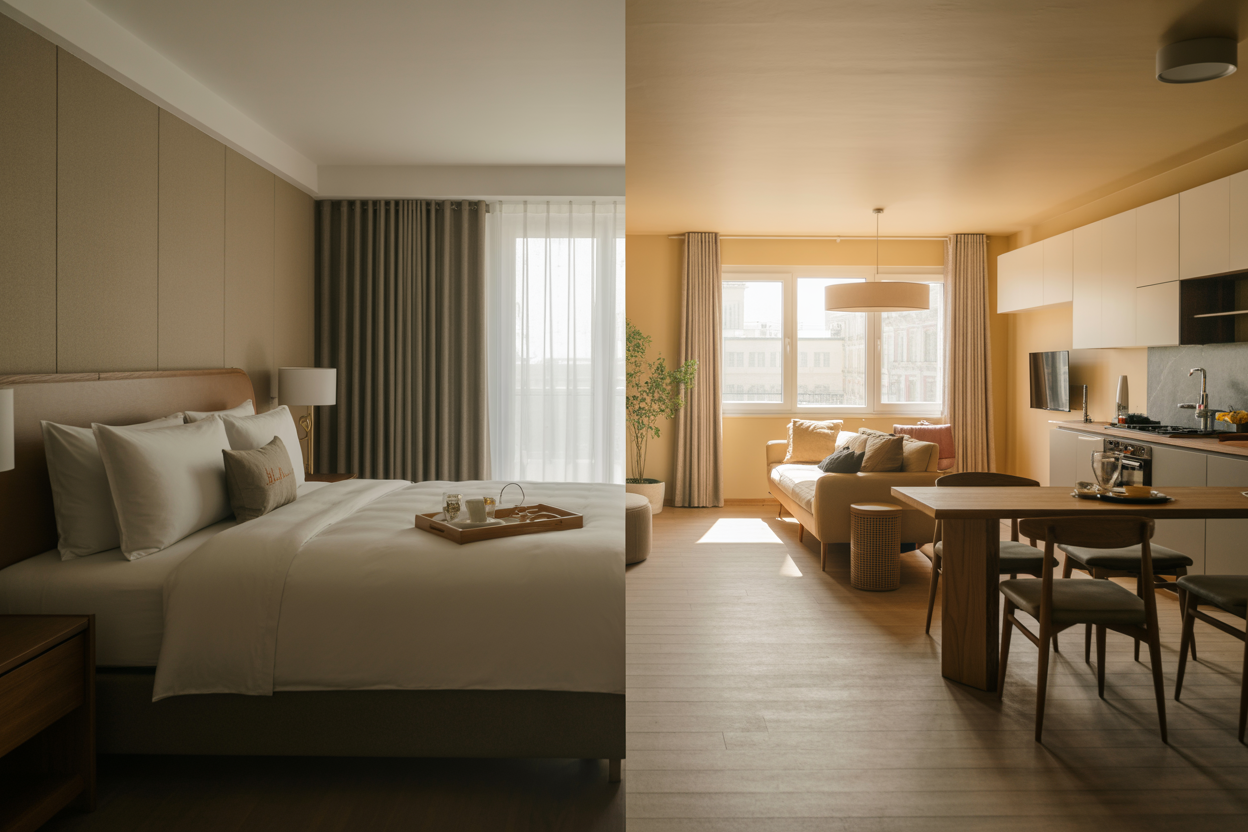
When you’re traveling with kids, the choice between hotels and apartments can make or break your family vacation. Hotels offer the convenience of daily housekeeping and front desk support, while apartments give you the space to spread out and the freedom to cook your own meals. Your budget plays a huge role too – apartments often cost less per night, especially for longer stays, but hotels might include breakfast and other perks that add value.
Think about what matters most to your family’s travel style. If you want to explore local neighborhoods, cook familiar meals for picky eaters, and give everyone room to relax, an apartment might be your best bet. But if you prefer being pampered with fresh towels daily and having someone to call when something goes wrong, hotels deliver that peace of mind. Either way, do your homework on the location to make sure you’re close to family-friendly activities and in a safe area where your kids can enjoy their time away from home.