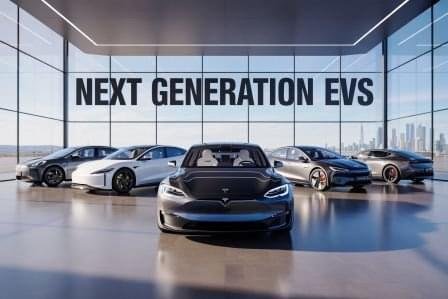
The electric vehicle industry is exploding with new players hungry to challenge Tesla’s dominance. For investors, automotive enthusiasts, and industry professionals tracking the next big thing, dozens of EV startups are racing to capture market share with breakthrough technologies and bold strategies.
This guide spotlights 12 EV startups positioned to become serious Tesla competitors. We’ll explore revolutionary battery technologies and autonomous driving systems that could reshape how we think about electric cars. You’ll also discover which Chinese companies are already making waves globally and why timing your investment in these emerging players could make or break your portfolio.
From luxury European manufacturers to scrappy American innovators, these startups aren’t just building electric cars—they’re reimagining the entire driving experience.
Revolutionary EV Technologies Disrupting Traditional Automotive
Advanced Battery Technologies Extending Range Beyond 500 Miles
The race to crack the code on next-generation battery technology has become the holy grail for EV startups looking to dethrone Tesla. Several emerging companies are pushing solid-state battery technology beyond theoretical limits, with QuantumScape leading the charge with their lithium-metal anodes that promise 15-minute charging to 80% capacity and over 1,000-mile range capabilities.
QuantumScape’s ceramic separators eliminate the dendrite formation issues that have plagued traditional lithium-ion batteries, allowing for much higher energy density. Their test results show batteries maintaining 80% capacity after 240,000 miles, which would outlast most vehicle lifespans. Toyota’s partnership with Panasonic on solid-state technology aims for commercial deployment by 2027, targeting 600-mile ranges with 10-minute charging windows.
StoreDot takes a different approach with their silicon nanowires and germanium nanowires, creating batteries that charge from 10% to 80% in just five minutes. Their extreme fast-charging (XFC) technology uses silicon-dominant anodes instead of graphite, dramatically reducing charging anxiety for consumers. The Israeli startup has already demonstrated their technology in phones and is scaling up for automotive applications.
CATL’s Qilin battery technology represents another breakthrough, achieving 10-minute charging capabilities while maintaining structural integrity through their cell-to-pack design. Their thermal management system allows the battery pack to operate efficiently across temperature ranges that would cripple conventional batteries.
Ultra-Fast Charging Solutions Reducing Wait Times to Minutes
ChargePoint and EVgo might dominate current charging infrastructure, but startups are reimagining the entire charging experience through breakthrough technologies. StoreDot’s extreme fast-charging batteries work hand-in-hand with ultra-high-power charging stations that deliver up to 350kW of power, compared to Tesla’s 250kW Superchargers.
Solid Power’s solid-state batteries can handle charging rates that would destroy conventional lithium-ion cells. Their all-solid-state design eliminates thermal runaway risks, allowing charging stations to pump electrons at unprecedented speeds without safety concerns. Ford and Hyundai have both invested heavily in Solid Power’s technology, recognizing its potential to eliminate range anxiety completely.
Amprius Technologies uses silicon nanowire anodes to achieve energy densities of 500 Wh/kg, nearly double that of conventional batteries. Their fast-charging capabilities mean drivers could add 300 miles of range in under 10 minutes, making electric vehicles more convenient than gas cars for long-distance travel.
Sila Nanotechnologies approaches the problem from a materials science perspective, replacing graphite anodes with silicon-based materials that can store 40% more energy. Their partnerships with BMW and Daimler suggest major automakers are betting on silicon-enhanced batteries as the next evolutionary step.
Autonomous Driving Capabilities Surpassing Current Market Leaders
While Tesla’s Full Self-Driving beta grabs headlines, several startups are developing autonomous systems that could leapfrog current market leaders. Aurora’s self-driving technology, backed by Amazon and Uber, focuses on Level 4 autonomy for both passenger vehicles and freight trucking. Their sensor fusion approach combines LiDAR, cameras, and radar with machine learning algorithms trained on billions of miles of real-world data.
Waymo’s spinout technology has found its way into several EV startups through partnerships and licensing deals. Companies like Canoo and Fisker are integrating advanced autonomous features that go beyond Tesla’s current capabilities, including true hands-free highway driving and automated parking in complex urban environments.
Cruise’s majority ownership by GM hasn’t stopped them from licensing their autonomous technology to EV startups looking to differentiate themselves. Their focus on urban driving scenarios gives partner companies advantages in city-focused electric vehicle markets.
Argo AI’s partnership with Ford and Volkswagen created technology that’s now being adapted by smaller EV manufacturers. Their virtual driver system processes sensor data 30 times faster than human reflexes, enabling split-second decision-making that surpasses human driving capabilities.
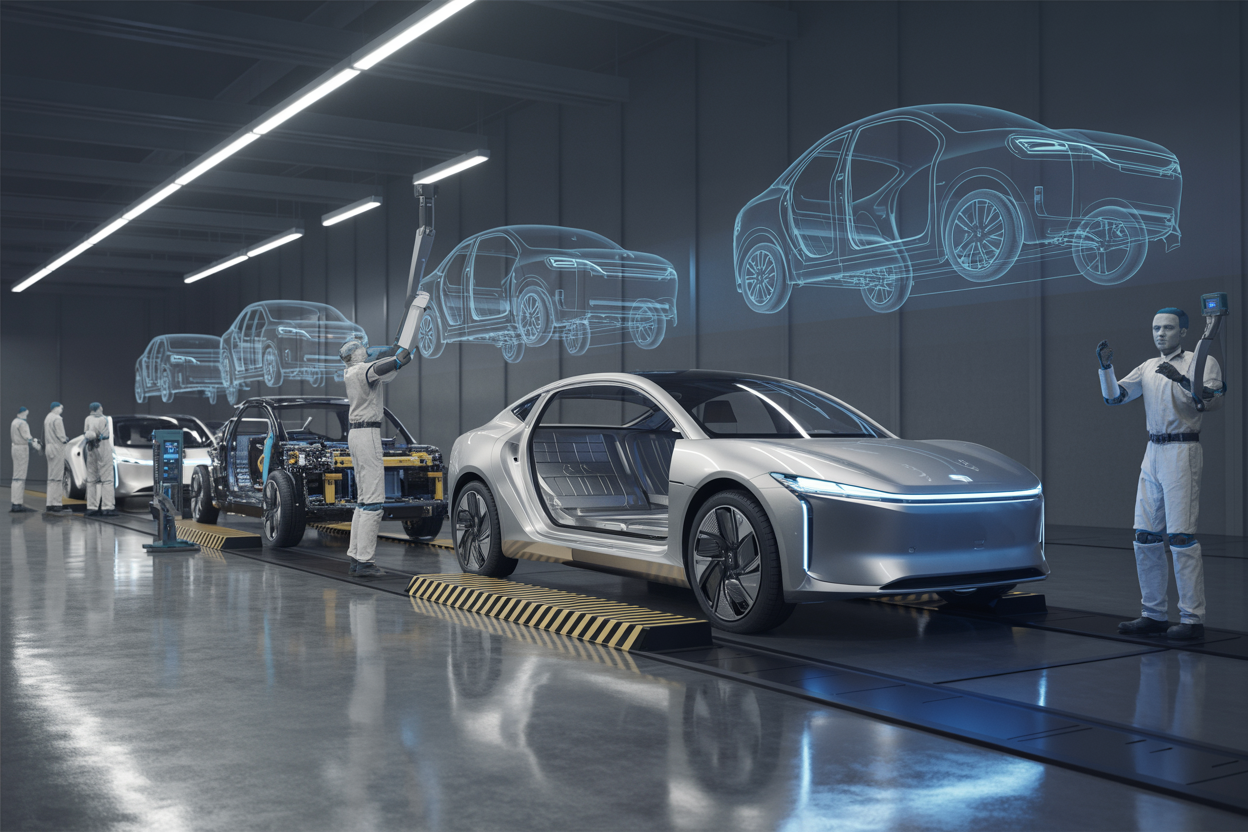
Innovative Manufacturing Processes Cutting Production Costs
Manufacturing efficiency separates successful EV startups from those that burn through investor capital without achieving profitability. Rivian’s Normal, Illinois factory uses modular assembly techniques that reduce production time by 40% compared to traditional automotive manufacturing. Their marriage point system allows for greater customization while maintaining assembly line efficiency.
Canoo’s skateboard platform approach revolutionizes manufacturing by creating a standardized base that supports multiple vehicle types. This modularity reduces tooling costs and allows rapid model variations without retooling entire production lines. Their micro-factory concept enables distributed manufacturing closer to end customers, reducing shipping costs and delivery times.
VinFast’s approach combines traditional automotive expertise with Silicon Valley innovation. Their Haiphong factory in Vietnam uses AI-powered quality control systems that catch defects before they reach final assembly, reducing rework costs and improving overall build quality.
Fisker’s partnership with Magna International leverages existing manufacturing capacity while incorporating new techniques like over-the-air software installation during final assembly. This approach eliminates the massive capital investment required for new factories while ensuring manufacturing quality meets automotive standards.
Promising Chinese EV Startups Challenging Global Markets
NIO’s Battery Swapping Innovation Transforming Ownership Models
NIO has revolutionized how we think about electric vehicle ownership with its groundbreaking battery swapping technology. While most Chinese EV companies focus on traditional charging infrastructure, NIO took a completely different approach that’s catching the attention of global investors looking for the next Tesla.
The company’s Power Swap stations allow drivers to exchange depleted batteries for fully charged ones in under five minutes. This eliminates the biggest pain point of EV ownership – lengthy charging times. NIO has deployed over 2,000 swap stations across China, with plans for aggressive international expansion.
What makes NIO’s approach particularly clever is the Battery-as-a-Service (BaaS) model. Customers can purchase vehicles without batteries, reducing upfront costs by approximately $10,000. They then subscribe to battery services, creating recurring revenue streams for NIO while making electric vehicle companies more accessible to price-sensitive consumers.
The financial implications are massive. Traditional automakers sell cars once and hope for service revenue. NIO creates ongoing relationships through battery subscriptions, software services, and premium experiences at their NIO Houses – luxury spaces that combine showrooms, lounges, and community centers.
NIO’s innovation extends beyond hardware. Their mobile battery swapping technology means stations can be deployed quickly in new markets without extensive infrastructure development. This gives them a significant competitive advantage over Tesla competitors that rely purely on fixed charging networks.
XPeng’s AI-Powered Smart Features Redefining User Experience
XPeng has positioned itself as China’s answer to Tesla’s software-first approach, focusing heavily on artificial intelligence and autonomous driving capabilities. Their vehicles come packed with advanced driver assistance systems that rival anything from established electric vehicle companies.
The company’s XPILOT system uses a combination of cameras, radar, and lidar sensors to deliver Level 3 autonomous driving capabilities in select conditions. What sets XPeng apart is their aggressive software update schedule – pushing new features and improvements over-the-air monthly, similar to smartphone updates.
XPeng’s voice assistant system, powered by their own AI technology, can control virtually every aspect of the vehicle through natural language commands. Drivers can adjust climate settings, navigate to destinations, or even order food delivery without taking their hands off the wheel.
The company has also integrated gaming and entertainment systems directly into their vehicles, recognizing that autonomous driving will fundamentally change how people spend time in cars. Their P7 sedan features a massive curved display that transforms the interior into an entertainment center during charging stops.
Smart parking represents another area where XPeng excels. Their vehicles can autonomously navigate complex parking structures, remember parking spots, and even come pick up owners when summoned through a smartphone app. These features aren’t just impressive demonstrations – they solve real problems for urban drivers in densely populated Chinese cities.
Li Auto’s Extended Range Technology Eliminating Range Anxiety
Li Auto took a pragmatic approach to electric mobility by developing extended-range electric vehicles (EREVs) that combine electric motors with small gasoline generators. This hybrid approach addresses range anxiety while delivering the smooth, quiet driving experience of pure electric vehicles.
The Li ONE, their flagship model, can travel over 800 kilometers on a single tank and charge, making long-distance travel worry-free. The gasoline engine never directly powers the wheels – it only charges the battery when needed, maintaining optimal efficiency and performance.
This technology particularly resonates in China, where charging infrastructure remains inconsistent outside major cities. Li Auto’s vehicles provide the environmental benefits of electric mobility companies while offering the convenience and flexibility of traditional vehicles.
The company’s focus on family-oriented SUVs has carved out a distinct niche among promising electric car startups. Their spacious interiors, advanced safety features, and practical design philosophy appeal to parents who want cutting-edge technology without sacrificing functionality.
Li Auto’s manufacturing efficiency stands out in the crowded Chinese EV market. They’ve achieved profitability faster than most competitors by focusing on a single, well-engineered platform rather than spreading resources across multiple vehicle lines. This disciplined approach to product development and market positioning demonstrates the kind of strategic thinking that separates successful EV startups from those that flame out despite impressive technology.
European EV Pioneers Leading Luxury Electric Mobility
Lucid Motors’ Premium Sedans Competing with Mercedes and BMW
Lucid Motors has positioned itself as a serious contender in the luxury electric sedan market, directly challenging established German automakers. The company’s Air sedan delivers an impressive EPA-estimated range of over 500 miles, setting a new benchmark for electric vehicle companies looking to overcome range anxiety among premium buyers. This Tesla competitor has focused on creating a luxury experience that rivals traditional premium brands while offering cutting-edge electric performance.
The Air Dream Edition produces over 1,100 horsepower and accelerates from 0-60 mph in under 2.5 seconds, demonstrating that luxury electric vehicles can deliver both comfort and thrilling performance. Lucid’s approach combines spacious interiors with advanced driver assistance systems, appealing to affluent consumers who expect both innovation and refinement. The company’s focus on premium materials, including sustainable options like recycled materials and vegan leather alternatives, shows how European electric car manufacturers and their American counterparts are redefining luxury automotive standards.
Polestar’s Scandinavian Design Philosophy Attracting Affluent Buyers
Polestar has carved out a unique niche among EV startups by emphasizing minimalist Scandinavian design principles and sustainability. The brand’s clean aesthetic appeals to environmentally conscious consumers who value both style and substance. Their vehicles feature uncluttered interiors, premium materials sourced responsibly, and technology integration that feels intuitive rather than overwhelming.
The Polestar 2 and upcoming Polestar 3 showcase the company’s commitment to creating vehicles that stand apart from typical luxury electric cars. Their design language emphasizes simplicity, functionality, and environmental responsibility, attracting buyers who want their vehicle choice to reflect their values. The brand’s transparent approach to carbon footprint tracking and commitment to becoming climate-neutral by 2030 resonates strongly with affluent consumers who prioritize sustainability alongside luxury.
Rimac’s Hypercar Expertise Pushing Performance Boundaries
Croatian startup Rimac has established itself as a leader in high-performance electric vehicle technology, with expertise that extends far beyond their own hypercars. The company’s Nevera hypercar produces 1,914 horsepower and can accelerate from 0-60 mph in just 1.85 seconds, demonstrating the incredible potential of electric powertrains in extreme performance applications.
What makes Rimac particularly interesting among promising electric car startups is their technology licensing business. Major automakers, including Porsche and Hyundai, have invested in Rimac and use their electric vehicle technologies. This dual business model of creating their own vehicles while supplying technology to established manufacturers positions Rimac as both a competitor and a crucial technology partner in the electric vehicle market.
The company’s focus on developing next-generation battery technology, advanced motor systems, and sophisticated vehicle control software makes them a key player in pushing the boundaries of what’s possible with electric performance vehicles.
Fisker’s Sustainable Materials Appealing to Eco-Conscious Consumers
Fisker Ocean represents a different approach to electric luxury, prioritizing environmental sustainability throughout the entire vehicle lifecycle. The company uses recycled materials extensively, including recycled plastic bottles for carpeting and fishing nets for speaker covers. This commitment to circular economy principles appeals to consumers who want their vehicle choice to align with their environmental values.
The Ocean features a solar roof that can add up to 1,500 miles of range per year in ideal conditions, showcasing innovative approaches to extending electric vehicle efficiency. Fisker’s “California Mode” allows all windows and the glass roof to open simultaneously, creating an open-air experience that traditional luxury vehicles cannot match.
Their subscription-based ownership model and focus on sustainable manufacturing processes position Fisker as more than just another electric vehicle company. They’re creating a brand identity centered on environmental responsibility while maintaining the premium features and performance that luxury buyers expect from their vehicles.
American Startups Revolutionizing Electric Transportation
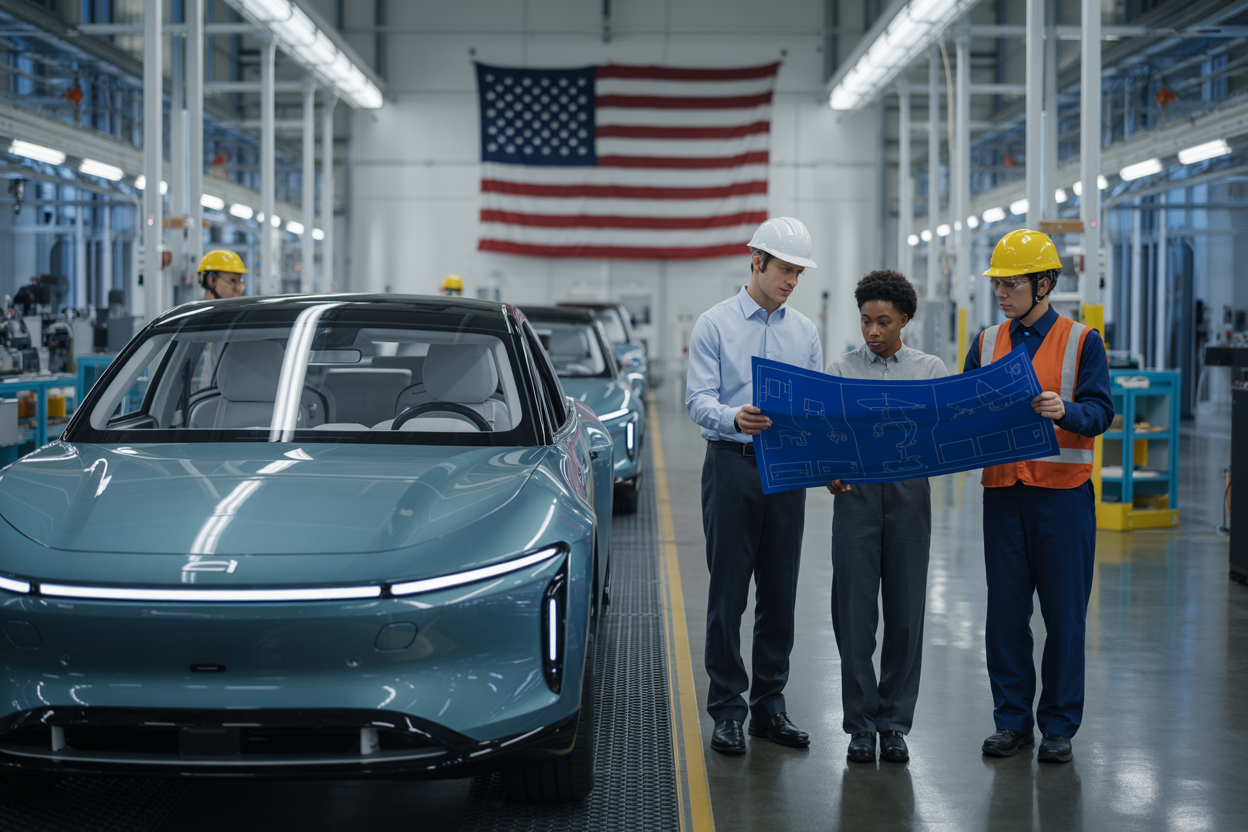
Rivian’s Electric Truck Dominance in Commercial Markets
Rivian has carved out a unique position among American EV startups by focusing on electric trucks and delivery vehicles rather than traditional passenger cars. The company’s strategic partnership with Amazon represents one of the most significant validation points for any Tesla competitor, with orders for 100,000 delivery vans that demonstrate real commercial demand for electric commercial vehicles.
The Amazon partnership goes beyond simple vehicle sales. Rivian developed custom delivery vans specifically designed for Amazon’s logistics network, featuring cargo optimization, driver ergonomics, and route efficiency that traditional automakers struggled to match. This collaboration validates Rivian’s technology while providing a massive, predictable revenue stream that many promising electric car startups lack.
Rivian’s R1T pickup truck targets adventure-oriented consumers who want electric capability without sacrificing utility. The truck offers over 400 miles of range, can tow 11,000 pounds, and includes innovative features like a “tank turn” mode and air suspension. The company’s direct-to-consumer sales model mirrors Tesla’s approach, cutting out dealership markups while maintaining better customer relationships.
Manufacturing represents Rivian’s biggest challenge and opportunity. The company retrofitted a former Mitsubishi plant in Illinois, giving them production capacity without the massive capital expenditure of building from scratch. However, scaling production to meet demand has proven difficult, with supply chain disruptions and manufacturing complexities causing delivery delays that have frustrated early customers.
Canoo’s Subscription Model Changing Vehicle Ownership
Canoo stands out among electric vehicle companies for reimagining not just the vehicle itself, but how people access transportation. The company’s subscription-only model eliminates traditional car ownership, insurance complications, and maintenance headaches by bundling everything into a single monthly payment.
The subscription approach makes electric vehicles accessible to consumers who can’t afford large upfront payments or don’t want long-term vehicle commitments. Canoo handles insurance, maintenance, repairs, and even charging network access, creating a hassle-free experience that traditional automakers can’t easily replicate with their dealer networks and financing partnerships.
Canoo’s vehicle design philosophy emphasizes maximum interior space through minimalist exterior styling. Their modular platform supports multiple vehicle configurations, from passenger vans to delivery trucks, allowing the company to serve diverse market segments with shared underlying technology. This flexibility could prove crucial as EV investment opportunities become more competitive and niche markets become essential for survival.
The company faces significant execution risks around manufacturing scale and subscription model economics. Managing a fleet of vehicles requires different expertise than traditional automotive manufacturing, including predictive maintenance, utilization optimization, and customer retention strategies that most automotive executives lack experience with.
Lordstown Motors’ Fleet-Focused Strategy Targeting Businesses
Lordstown Motors chose a laser-focused approach among electric mobility companies by targeting commercial fleets exclusively with their Endurance pickup truck. Fleet sales offer several advantages over consumer markets: bulk purchasing decisions, predictable replacement cycles, and less sensitivity to styling trends that can make or break consumer vehicle launches.
The Endurance features hub-mounted electric motors that eliminate traditional drivetrains, reducing mechanical complexity and maintenance requirements. Fleet operators particularly value this simplification because it reduces downtime and repair costs, making total cost of ownership calculations more favorable compared to traditional trucks.
Lordstown’s manufacturing strategy involves converting a former General Motors plant in Ohio, leveraging existing automotive infrastructure and local workforce expertise. This approach reduces startup costs while maintaining quality standards that new facilities might struggle to achieve initially.
The company has faced significant financial and operational challenges, including management turnover, production delays, and questions about pre-order authenticity. These struggles highlight the difference between having innovative technology and executing successful business operations at automotive scale.
Fleet customers have shown interest in electric trucks, but they also demand proven reliability and comprehensive service networks before committing to large purchases. Lordstown must demonstrate operational excellence while competing against established automakers who are launching their own electric commercial vehicles with deeper resources and broader service capabilities.
Identifying Key Success Factors That Separate Winners from Failures

Strong Financial Backing and Strategic Partnerships
Money talks in the EV game, and the startups that survive the cutthroat race to become the next Tesla all share one thing: deep pockets and smart alliances. The electric vehicle industry demands massive upfront investments that would make most entrepreneurs break out in cold sweats. We’re talking billions, not millions.
Take NIO as a prime example. The Chinese electric vehicle company secured over $1 billion in government backing and strategic partnerships with state-owned entities, giving them the runway to develop cutting-edge battery swapping technology and premium vehicles. Without this financial cushion, they’d be another cautionary tale in startup graveyards.
Smart EV startups don’t just chase money—they chase the right money. Strategic partnerships with established automotive manufacturers provide more than capital; they offer manufacturing expertise, supply chain access, and market credibility. Rivian’s partnership with Amazon wasn’t just about funding—it guaranteed a massive customer base for their delivery vehicles while providing real-world testing grounds.
The best electric vehicle companies also diversify their funding sources. Successful startups combine venture capital, government incentives, strategic partnerships, and eventually public markets to fuel their growth. This multi-pronged approach creates stability when one funding source dries up.
Proven Manufacturing Capabilities and Scalability Plans
Building cars isn’t like developing software—you can’t just push an update to fix manufacturing problems. The EV startups that thrive understand that manufacturing is where dreams either become reality or turn into expensive lessons.
Tesla’s early struggles with Model 3 production taught the entire industry a crucial lesson: brilliant engineering means nothing if you can’t build vehicles at scale. The promising electric car startups today are learning from Tesla’s mistakes by securing manufacturing partnerships early or investing heavily in proven production capabilities.
Companies like Lucid Motors benefit from leadership teams with deep manufacturing experience at established automakers. Their CEO Peter Rawlinson previously worked at Tesla during the Model S development, bringing hard-won knowledge about scaling electric vehicle production.
Smart EV startups also plan for flexibility in their manufacturing approach. Some partner with contract manufacturers like Magna or Foxconn, while others acquire existing facilities from traditional automakers. The key is having a clear path from prototype to mass production that doesn’t require reinventing manufacturing from scratch.
Quality control becomes exponentially more challenging as production scales. The electric mobility companies that succeed invest early in robust quality systems and automated production lines that can maintain consistency across thousands of vehicles.
Unique Value Propositions Differentiating from Competitors
The EV market is getting crowded fast, and “being electric” isn’t enough anymore. The Tesla competitors that break through offer something genuinely different—whether that’s superior technology, unique design, or serving underexplored market segments.
Battery technology often becomes the key differentiator. Some Chinese EV companies like BYD focus on lithium iron phosphate batteries that prioritize safety and longevity over raw performance. Others chase solid-state batteries or innovative cooling systems that could revolutionize electric vehicle performance.
Design philosophy also separates winners from wannabes. While Tesla popularized minimalist interiors, companies like Lucid Air focus on luxury and space efficiency. European electric car manufacturers often emphasize traditional luxury craftsmanship combined with electric innovation.
Market positioning matters enormously. Rivian carved out the electric truck space before Ford and GM could react. Canoo targets delivery and subscription markets that traditional automakers largely ignore. The most successful American EV startups find white spaces in the market rather than going head-to-head with established players.
Leadership Teams with Automotive and Technology Experience
The EV startup success factors always include one critical element: leadership that understands both technology and automotive industries. Building electric vehicles requires expertise that spans multiple complex domains, and teams lacking this breadth consistently struggle.
The best teams combine automotive veterans who understand manufacturing, safety regulations, and dealer networks with tech experts who grasp software, batteries, and autonomous systems. This hybrid expertise proves crucial when navigating the countless decisions that determine whether startups thrive or fail.
Experience matters, but so does timing. Leaders who worked at Tesla during its growth phases bring invaluable knowledge about scaling challenges and market positioning. Similarly, executives from traditional automakers understand regulatory requirements and supply chain management that pure tech backgrounds often miss.
The most promising electric vehicle companies also have leaders who can attract top talent from both industries. Building world-class EV startups requires convincing engineers, designers, and business experts to take risks on unproven companies rather than joining established players.
Investment Opportunities and Market Timing for Maximum Returns

Pre-IPO Investment Strategies for Early Access
Getting into promising EV startups before they go public requires strategic positioning and access to exclusive investment channels. Angel investor networks and venture capital syndicates offer the most direct path to early-stage opportunities, though minimum investments typically start at $25,000 to $100,000.
Crowdfunding platforms like EquityZen and Forge have democratized pre-IPO access, allowing retail investors to purchase shares from existing employees and early investors. These secondary markets often feature shares from companies like Rivian, Lucid Motors, and other EV startups that gained significant private market traction before their public debuts.
Building relationships with venture capital firms specializing in automotive technology creates opportunities to co-invest alongside institutional players. Firms like Bessemer Venture Partners, General Catalyst, and Fidelity Management have consistently backed winning electric vehicle companies.
Direct participation through accelerator programs offers another avenue. Y Combinator, Techstars, and automotive-focused accelerators regularly showcase emerging EV startups seeking funding. These events provide direct access to founders and early investment rounds.
Employee stock purchase programs represent an often-overlooked opportunity. Working for or maintaining connections within the EV ecosystem can provide insider access to equity compensation and early investment rounds.
Public Market Entry Points and Valuation Metrics
Timing public market entry for EV startups requires understanding cyclical patterns and valuation frameworks specific to the electric vehicle sector. The best entry points typically occur during broader market corrections when high-growth stocks trade at discounted multiples.
Key Valuation Metrics for EV Startups:
| Metric | Benchmark Range | What It Measures |
|---|---|---|
| Price-to-Sales | 2x-15x | Revenue multiple vs. traditional auto (0.5x-1x) |
| EV/Revenue | 5x-25x | Enterprise value relative to revenue |
| Price-to-Book | 3x-10x | Market value vs. tangible assets |
| Pre-revenue Valuation | $500M-$5B | Market potential assessment |
Revenue multiples for EV startups trade significantly higher than traditional automakers, reflecting growth expectations and technology premiums. Tesla’s historical trading range of 5x-15x revenue provides a reference point, though early-stage companies often command higher multiples based on potential rather than current performance.
Market timing strategies should focus on quarterly earnings cycles and industry-specific catalysts. Battery technology breakthroughs, regulatory changes, and production milestone announcements create optimal entry windows.
Dollar-cost averaging works particularly well for volatile EV stocks, allowing investors to build positions gradually while managing price volatility. Setting entry points at 20-30% below recent highs captures value during normal market fluctuations.
Risk Assessment Framework for EV Startup Investments
Successful EV startup investing requires systematic risk evaluation across multiple dimensions. Technology risk ranks highest, as unproven battery chemistry, manufacturing processes, and software integration can derail promising companies.
Manufacturing Risk Factors:
- Production scaling challenges (most critical failure point)
- Capital intensity requirements ($1B+ typical for full-scale production)
- Supply chain dependencies, particularly battery sourcing
- Quality control and safety compliance standards
Financial risk assessment centers on cash burn rates and funding runway. EV startups typically consume $50-200 million annually during pre-production phases. Companies with less than 18 months of operating capital face significant dilution or bankruptcy risk.
Competitive positioning within the rapidly evolving EV landscape determines long-term viability. Companies targeting overcrowded segments (luxury sedans) face higher failure rates than those addressing underserved niches (commercial vehicles, specialized applications).
Regulatory risk varies by geographic focus. European-focused companies benefit from aggressive EV adoption mandates, while American companies face policy uncertainty. Chinese market exposure brings both growth potential and geopolitical risks.
Management team evaluation proves crucial for early-stage investments. Successful EV startup leaders typically combine automotive industry experience with technology backgrounds. Previous startup experience, particularly in hardware-intensive industries, correlates with better execution odds.
Portfolio diversification across different EV subsectors (battery technology, charging infrastructure, autonomous driving) reduces concentration risk while maintaining sector exposure. Allocating 5-15% of investment portfolios to EV startup investments balances growth potential with overall portfolio stability.
Conclusion
The electric vehicle landscape is exploding with innovation, and these 12 startups represent the cutting edge of what’s possible in transportation. From Chinese companies pushing boundaries in battery technology to European luxury brands redefining premium electric mobility, each brings unique strengths that could reshape the entire industry. American startups are proving that Tesla’s success wasn’t a fluke – there’s room for multiple winners in this massive market shift.
Smart investors and industry watchers should keep their eyes on companies that master the winning formula: superior technology, strong manufacturing capabilities, strategic market positioning, and solid financial backing. The next Tesla might already be on this list, quietly building the foundation for tomorrow’s transportation revolution. Don’t just watch from the sidelines – understanding these emerging players now could give you a front-row seat to the biggest automotive transformation in over a century.